
Case Study
Understanding Urban Loneliness Among Young Adults through Research & Gamification
Timeline: February – June 2024
Role: Researcher, Facilitator, Co-Designer
Team: Cristina Campos (Architect & Sustainable Designer), Dominika Pancerz (Mechanical Engineer & Sustainable Designer)
Methods: Participatory Design, Game Design, Prototyping, Ethnographic Research, Interviews, Workshop Facilitation
Overview
Urban loneliness is a rising yet stigmatized issue among young adults in Copenhagen. While municipalities and community organizations offer programmes to support social well-being, professionals lack simple, participatory tools that help young residents communicate their experiences and influence real urban design decisions.
For Posiact, this project demonstrates how social impact design, participatory co-creation, and playful tools can transform complex social issues into meaningful conversations and actionable insights.
The Challenge
Young adults reported difficulty forming social connections in the city, influenced by cultural norms, spatial design, and limited opportunities for casual encounters. Experts highlighted gaps in existing approaches:
"How do you prevent loneliness? Maybe we should focus on preventing it, not just solving it."
— Health Professional
“Danish culture and the respect of personal space is good, but it also hinders connections.”
— Volunteer at Ventilen
Although municipal initiatives existed, no replicable tool enabled young adults and professionals—from healthcare to urban planning—to discuss how public spaces influence loneliness. The main design question guiding the project was:
How can participatory design methods facilitate dialogue about urban loneliness and feed young people’s insights into real urban design decisions?
Approach
The Posiact team used a participatory and game-based research strategy to create a safe, engaging space for discussing a sensitive topic.
Research Activities
Reviewed 120+ articles on loneliness, public space, and mental health
Conducted an online survey with 41 young residents
Interviewed and co-designed with 14+ experts across healthcare, architecture, community work, and urban planning
“As architects we should stop assuming and start basing our design on data and who we are working with.”
— Architect at Arki_lab
Designing a Dialogue Game
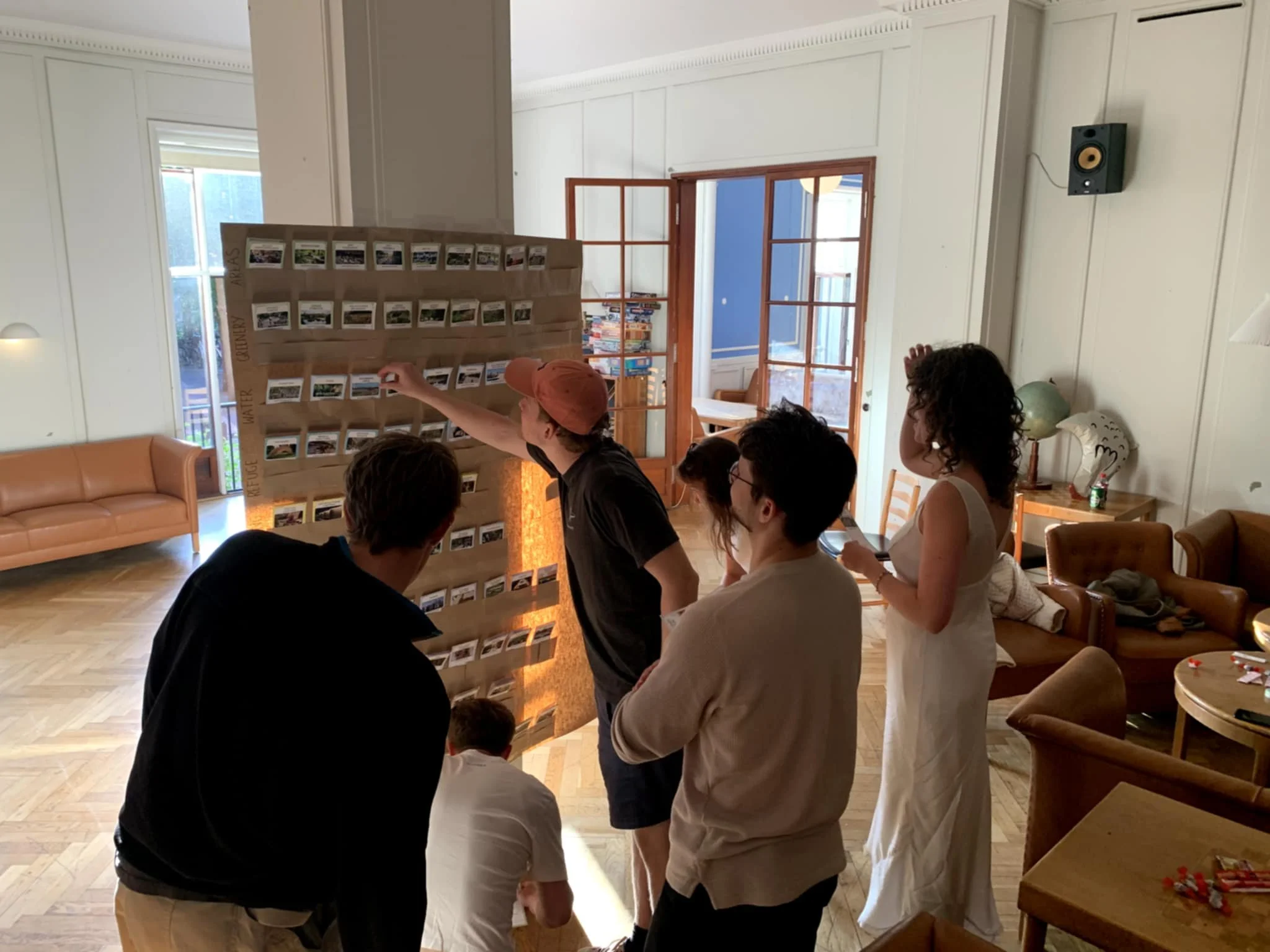
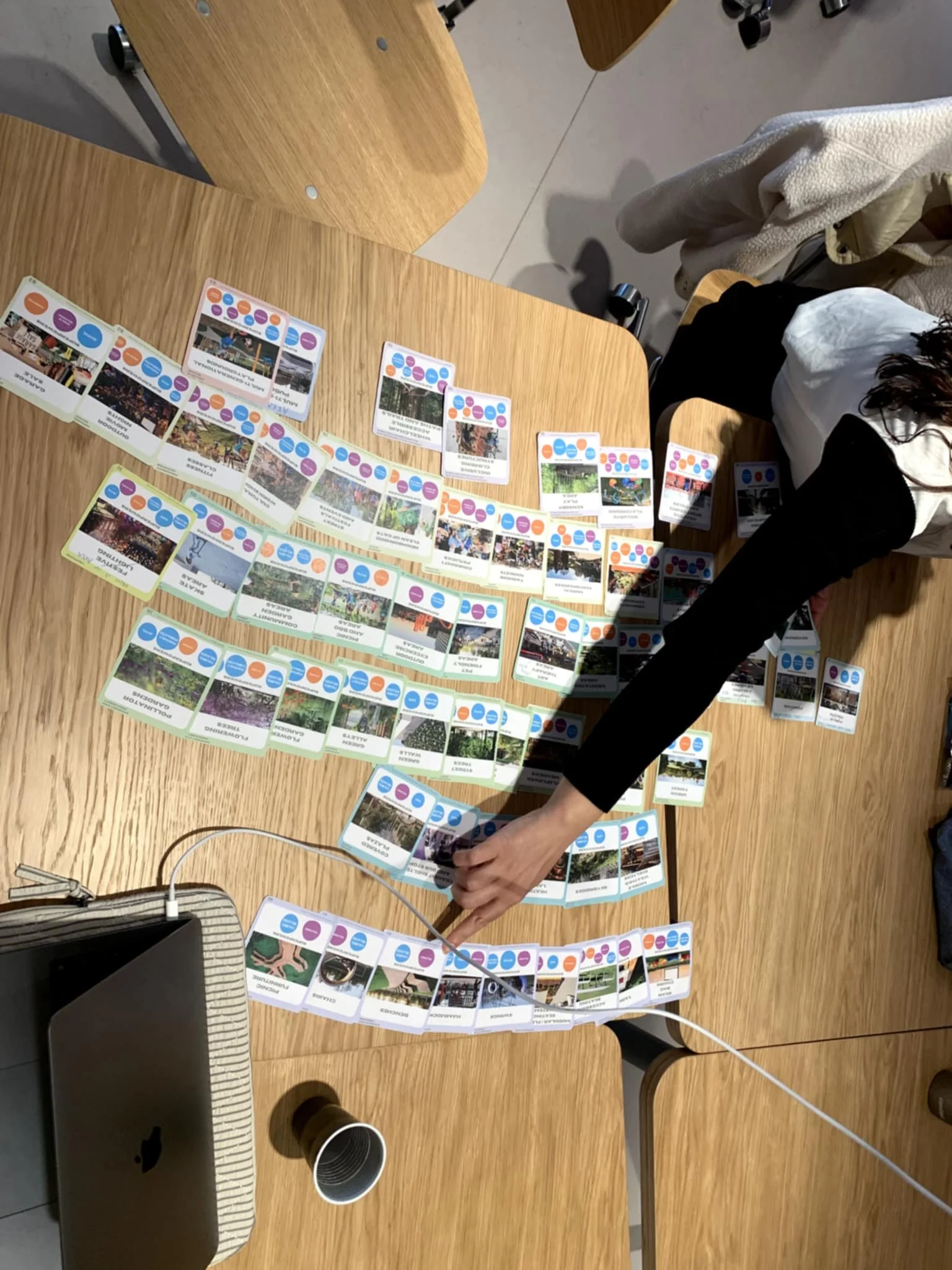
Insights from the research informed the creation of a participatory card game—a tangible boundary object used to spark reflection and dialogue.
The game was structured into three categories:
WHAT — activities & urban objects
WHERE — green and blue urban areas
WITH WHO — social dynamics & visibility
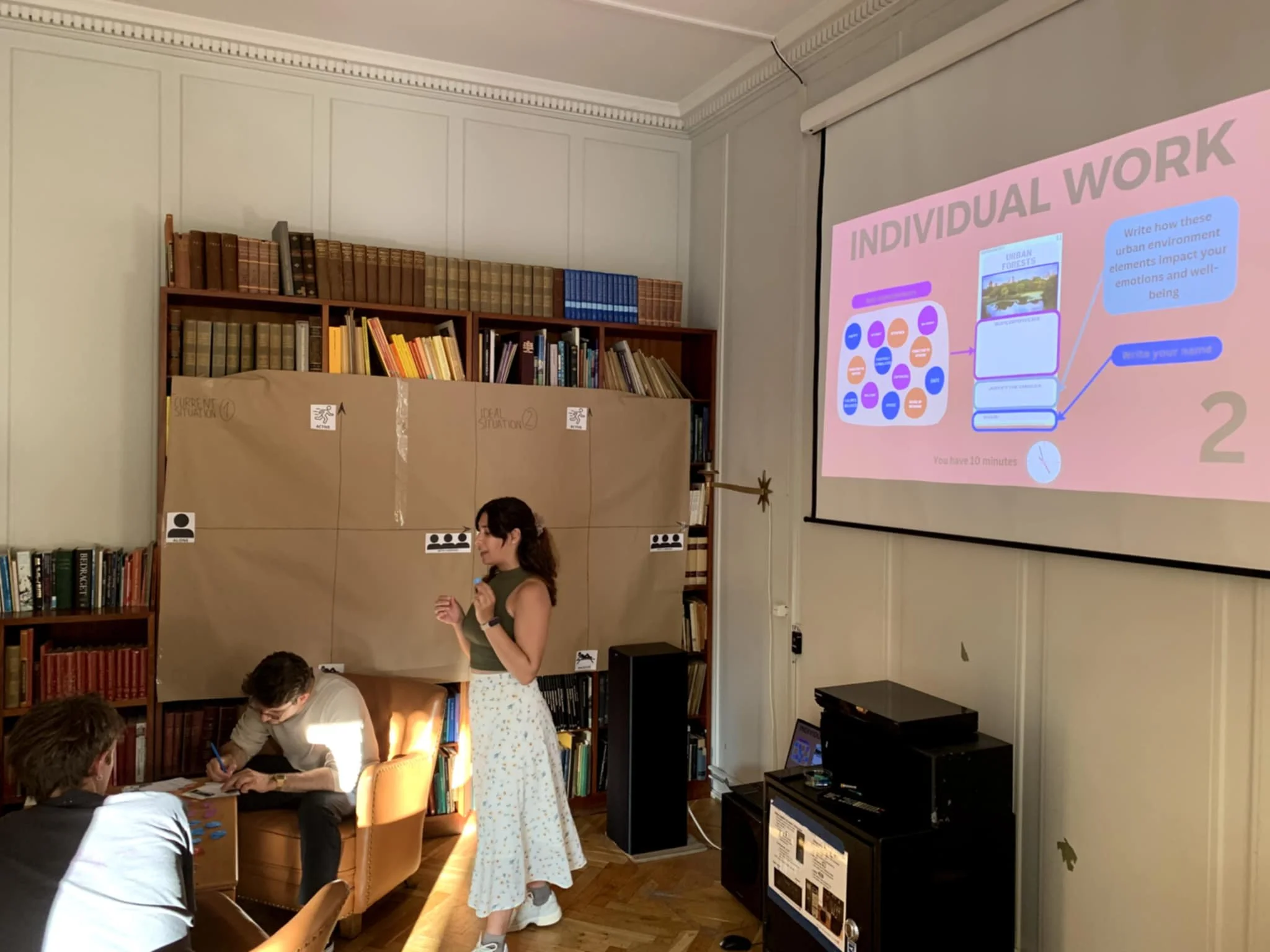
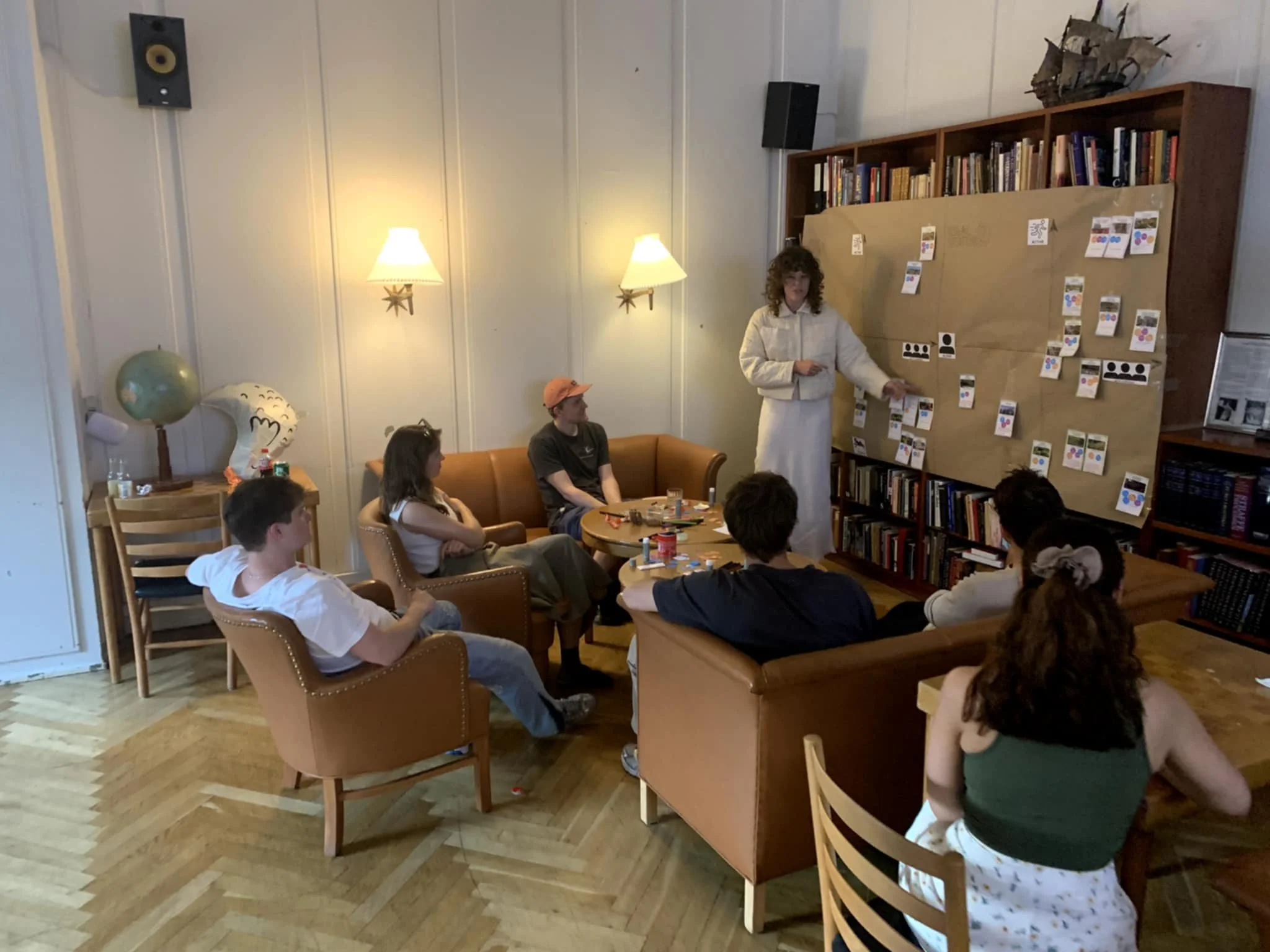
The prototype was tested during a co-creation workshop at Nordisk Kollegium, in collaboration with the Østerbro Local Committee. Participants used the cards to:
Share experiences of loneliness
Discuss barriers to connection
Envision improvements to real neighborhood spaces
Co-create proposals for fostering social connectedness
“Can we design public space so it facilitates meetings that tackle loneliness?”
— Architect at GXN Studio
Results
The workshop showed that playful participation can unlock honest, constructive conversations about loneliness—something difficult to achieve through interviews alone.
Key Outcomes
Participants became more aware of their social habits, emotions, and spatial experiences.
“I was not aware of my intuition and patterns around loneliness—now I am.”
— Workshop ParticipantThe game enabled participants to open up, connect, and co-create ideas, demonstrating the power of tangible tools in reducing stigma.
Insights from the session led to a second iteration of the game, featuring clearer visuals, refined categories, and better facilitation guidance.
An adaptable framework and facilitation manual was created for potential use in future municipal or community workshops.
Deliverables
A tested participatory game addressing urban loneliness
An insight report linking social well-being with urban design strategies
A facilitation framework for municipalities, NGOs, and community groups
“I gained insight into different strategies for dealing with loneliness, and new ideas for how to spend my free time.”
— Workshop Participant
Impact for Posiact
This project reflects Posiact’s mission: designing social impact tools that empower communities, create dialogue, and improve well-being through participatory innovation.
The dialogue game is now being further developed as a potential Posiact offering for:
Municipal engagement processes
Youth organizations
Universities and dormitories
Urban planning consultations
Mental health awareness initiatives
It represents a scalable, human-centered approach to community engagement—grounded in empathy, research, and co-design.